
Last verified: 11 October 2026. Every price and feature was checked against the vendor's official page on this date; the few press-sourced figures are marked. Prices in USD unless noted.
By Kabandi Saikia and Sukanya Kakoty, maarket.ai, a distribution platform for products. First published 30 September 2026. Picks are editorial, based on vendor documentation and launch coverage, not hands-on testing. No vendor paid for inclusion or placement, and this page carries no affiliate links.
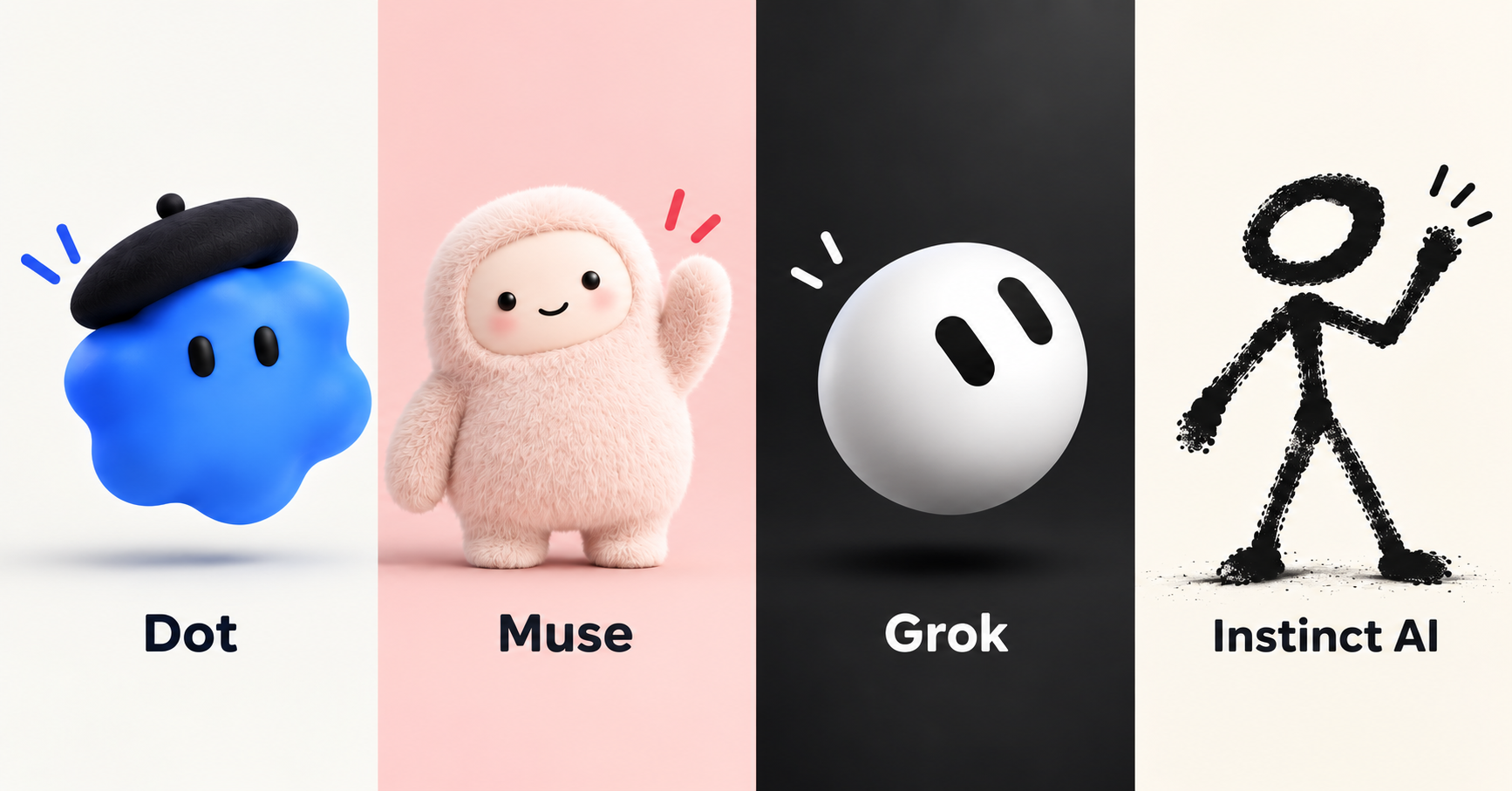
Quick answer: An AI agent completes tasks for you, not just answers: it uses its own cloud computer or connected apps, works in the background and asks before big actions. The best personal AI agents in October 2026 are Meta Muse (free, in WhatsApp), OpenAI Dots (with ChatGPT Pro, from $100/mo), Grok Bot (with SuperGrok, $30/mo) and Instinct (invite-only). To build agents for work, the best platforms are Zapier and Lindy (no-code), n8n (technical teams) and CrewAI or LangChain (developers).
Top picks by use case
- Best free personal AI agent: Meta Muse, free for most tasks, US only
- Best AI agent for work: OpenAI Dots, in ChatGPT, Slack and Teams
- Best for running several agents: Grok Bot
- Best no-code AI agent builder: Zapier Agents, free for 400 activities a month
- Best for technical teams: n8n, free to self-host
- Best developer framework: CrewAI or LangChain
What is an AI agent? (And how is it different from a chatbot?)
A chatbot answers your question and stops. An AI agent takes actions to finish a task: it signs into your apps, browses, fills in forms, sends messages and keeps working after you close the chat, usually asking for approval before anything consequential. In 2026, AI agents come in three forms:
- Personal AI agents: consumer agents with their own cloud computer that run errands for one person (Muse, Dots, Grok Bot, Instinct).
- AI agent platforms: chat assistants with agent features (ChatGPT, Claude, Gemini) and no-code builders for automating team workflows (Zapier, Lindy, Dust, n8n, Relevance AI).
- Developer frameworks: open-source libraries for building custom agents in code (CrewAI, LangChain).
Personal AI agents compared
Swipe sideways to see all columns →
| Meta Muse | OpenAI Dots | Grok Bot | Instinct | |
|---|---|---|---|---|
Maker | Meta | OpenAI | xAI | Spear Street Technology |
Launched | 8 Sep 2026 | 29 Sep 2026 | 11 Aug 2026 (beta) | Aug 2026 (invite-only) |
Cheapest way in | Free; paid $20 and $100/mo* | ChatGPT Pro (from $100/mo) or Business Premium (price not published) | SuperGrok ($30/mo) or a paid Cursor plan | Invite only; no published price |
Talk to it via | Muse app (iOS, Android), muse.ai, WhatsApp | ChatGPT, Slack, Teams, voice calls | Mac, Windows, iPhone apps; X | Text or phone call |
Availability | US | Pro: eligible markets excl. EEA, Switzerland, UK*; Business Premium: all supported regions | Beta; enterprise via sales | Waitlist or invite |
Safeguards | Separate Sentinel agent approves internet actions; asks before emails and purchases; audit trail | Custom Rules: allow, require approval or block actions | Not detailed in xAI's announcements | Few published |
Best for | Everyday life admin | Work projects | Several agents in parallel | Errands by text |
\Press-sourced: TechCrunch (Muse paid plans), Unite.AI (Dots Pro regions).*
AI agent platforms compared
Swipe sideways to see all columns →
# | Platform | Type | Free option | Cheapest paid | Best for |
|---|---|---|---|---|---|
5 | ChatGPT | Chat assistant | Free plan | Agent (Dots) from Pro, $100/mo | Teams already on ChatGPT |
6 | Claude | Chat assistant | Free plan | Pro $17/mo billed yearly ($20 monthly) | Writing, research and coding agents |
7 | Gemini | Chat assistant | Free plan | Google AI Pro $19.99/mo; Gemini Enterprise Business from $21/seat | Google Workspace teams |
8 | Zapier Agents | No-code builder | 400 activities/mo | Agents Pro $33.33/mo billed annually | Most non-technical teams |
9 | Lindy | No-code builder | 7-day trial ($50 of credits) | Team $49.99/mo (5,000 credits) | Inbox, meeting and sales assistants |
10 | n8n | Workflow + agents | Free to self-host | Cloud Starter €20/mo billed yearly | Technical teams, self-hosting |
11 | Dust | No-code builder | Free seat, 500 lifetime credits | Pro €24/seat/mo billed yearly | Company-knowledge agents |
12 | Relevance AI | No-code builder | No | Enterprise (sales-led) | Larger teams building AI workforces |
13 | CrewAI | Developer framework | Open source; hosted Basic free (50 executions) | Enterprise (custom) | Multi-agent apps in Python |
14 | LangChain | Developer framework | Open source; LangSmith Developer free (1 seat) | LangSmith Plus $39/seat/mo | Custom production agents |
How we picked: personal agents qualified if they run tasks in the background on their own computer or connected accounts and are available to the public, even by invite. Platforms qualified if they can take actions in other tools, run on triggers, schedules or requests, and publish their plans on their own site. Relevance AI is the one exception: it publishes its plan structure but not prices. Every entry was re-checked on 11 October 2026. Entries are numbered for navigation; the "best for" labels are editorial picks.
Why this list matters
- 2026 is the year personal agents arrived. All four headline personal agents launched between August and September 2026: Grok Bot (11 August), Instinct (August, invite-only beta), Muse (8 September) and Dots (29 September). Instinct then raised $1B at a $10B valuation on 28 September.
- They share one architecture. Each gets an always-on cloud computer, signs into your accounts, works in the background and asks before big actions. The difference is where you talk to it and what it costs.
- Access is the real cost. You hand over your inbox, calendar and sometimes your card. Muse and Dots publish detailed safeguards; Instinct publishes far less.
- For work, the pricing meter matters more than the price. Platforms charge by seats (Claude), seats plus credits (Dust), credits (Lindy), activities or tasks (Zapier), executions (n8n, CrewAI) or traces (LangSmith). Pick the meter that matches how often your agent runs.
- MCP decides what your agent can reach. Agents connect to other apps through the Model Context Protocol. Zapier, n8n and Relevance AI all support it; see our guide to official MCP servers for which business apps your agent can plug into.
Part 1: Personal AI agents
1. Meta Muse: best free personal AI agent
Is Meta Muse free? Yes, for most tasks. Meta Muse is the most accessible agent here: message it like a person in the Muse app, at muse.ai or in WhatsApp.
- What it does: sends email, books travel, fills in forms, negotiates bills and checks out with one-time card numbers via Link by Stripe; Meta's Connect recap adds Shop Pay and PayPal through shopping connectors.
- Safeguards: a dedicated secure computer with its own browser, a separate Sentinel agent that approves anything reaching the internet, approval before emails and purchases, and a full audit trail.
- Pricing: free for most tasks, with subscriptions for heavier use; TechCrunch reported a $20/mo Power plan and a $100/mo Maximum plan. Meta doesn't publish prices.
- Watch out: US only, and your interactions train Meta's models unless you opt out.
- Watch: Introducing Muse (official launch video).
Best for: non-technical users who want life admin handled from WhatsApp.
2. OpenAI Dots: best personal AI agent for work
How much do OpenAI Dots cost? Your first dot is included with ChatGPT Pro (from $100/mo) or Business Premium (OpenAI doesn't publish a Business Premium price); it isn't on Free, Go or Plus. OpenAI Dots launched at DevDay on 29 September 2026.
- What it does: runs on GPT-6 Astra with its own cloud computer and browser, and connects to over 4,000 apps.
- How you use it: ChatGPT, Slack, Teams or a voice call; texting is "coming soon".
- Controls: Custom Rules let you allow, require approval for, or block specific actions. Dot conversations don't count toward ChatGPT usage limits.
- Watch out: extra dots are planned but unpriced, and Pro doesn't yet cover the EEA, Switzerland or UK (per Unite.AI); Business Premium covers all supported regions.
- Watch: Introducing dots (official launch video).
Best for: ChatGPT Pro users who want an agent running projects across Slack and Teams.
3. Grok Bot: best for running several agents at once
What is Grok Bot? Grok Bot is xAI's always-on AI agent, in beta since 11 August 2026. You create several bots as "AI teammates" and put them in a group chat so they pass work between themselves.
- How it works: each bot is always on, with browser and terminal access, and signs into your apps. Routines let you do a job once while a bot watches, then it repeats it on its own.
- Pricing: included with SuperGrok ($30/mo), SuperGrok Plus ($100/mo), SuperGrok Heavy and paid Cursor plans (Pro, Pro+, Ultra, Teams), with its own usage allowance.
- For companies: Grok Bot for Enterprise has been available since 3 September through sales, and Team Bots (pre-built bots that work in Slack) entered public beta on 28 September.
- Watch out: still in beta, and xAI doesn't publish how large the separate Grok Bot usage allowance is on each plan.
- Watch: Introducing Grok Bot (official launch video).
Best for: founders and operators running several agents on prospecting, inbox and admin.
4. Instinct: best personal AI agent without an app
How do I get Instinct AI? Instinct is invite-only: join the waitlist on its site or get an invite from an existing user. It comes from Spear Street Technology in San Francisco.
- What it does: follows up on dropped threads, runs errands and proactively texts or calls you.
- How you use it: no app; you text or call it.
- Access it asks for: messages, emails, audio and voice, and precise location if you share it (privacy policy).
- Pricing: none published during the beta, which launched in August 2026; its terms allow fees later.
- Watch out: the fewest published safeguards of the four; waitlist or invite only.
- Watch: founder Noah Shinn explains how Instinct works (Invest Like the Best).
Best for: early adopters who want errands done over text.
Part 2: AI agent platforms for work
Chat assistants with agent features
5. ChatGPT: best if your team already lives in ChatGPT
ChatGPT has a free plan; Dots, its always-on agent, is included from Pro (OpenAI's help centre lists Pro at $100, $200 and $500 a month). Its older "agent mode" has been retired, so Dots is now ChatGPT's agent: it works in the background on its own computer and connects to over 4,000 apps.
Best for: teams that want agents inside the assistant they already use.
6. Claude: best for writing, research and coding agents
Claude is free to start; Pro is $17/mo billed yearly ($20 monthly). Team Standard seats are $20/seat/mo billed yearly ($25 monthly). Developers can run hosted agents with Claude Managed Agents at $0.08 per session-hour plus token costs. Claude connects to business apps through connectors built on MCP.
Best for: teams that want an assistant that can act in their apps, plus an API path to custom agents.
7. Gemini: best for Google Workspace teams
Gemini is free, with Google AI Pro at $19.99/mo. Gemini Enterprise Business starts at $21/seat/mo and includes a no-code Workflow Builder for custom agents.
Best for: companies on Google Workspace that want agents next to Gmail, Docs and Drive.
No-code AI agent builders
8. Zapier Agents: best no-code builder for most teams
Is there a free no-code AI agent builder? Yes: Zapier Agents is free for 400 activities a month, and Agents Pro is $33.33/mo billed annually for 1,500 activities. Agents can act across Zapier's 9,000+ app integrations, Separately, Zapier MCP, available on all accounts, draws on your regular Zapier task allowance at two tasks per tool call.
Best for: non-technical teams automating work across many apps.
9. Lindy: best for inbox, meeting and sales assistants
Lindy offers a 7-day free trial with $50 of credits; Team is $49.99/mo with 5,000 credits, and top-ups are $10 per 1,000 credits. Lindy says anything with outside impact waits for your approval.
Best for: founders who want a ready-made assistant for email, meetings and follow-ups.
10. n8n: best for technical teams and self-hosting
n8n is free to self-host (Community Edition). Cloud Starter is €20/mo billed yearly for 2,500 workflow executions, and pricing counts whole workflow runs, not steps. Companies with fewer than 20 employees can get 50% off the Business plan.
Best for: technical teams that want control over hosting and data.
11. Dust: best for agents that use company knowledge
Dust offers a free seat with 500 lifetime credits; Pro is €24/seat/mo billed yearly (€30 monthly) with 8,000 credits per seat. Business customers can choose US or EU data residency.
Best for: teams building assistants on top of internal docs, especially in the EU.
12. Relevance AI: best for larger teams building an AI workforce
Relevance AI lists only an Enterprise plan, through sales. It publishes a remote MCP endpoint so its agents can be used from other AI clients.
Best for: sales and ops teams with budget for a sales-led platform.
Developer AI agent frameworks
13. CrewAI: best open-source multi-agent framework
CrewAI is MIT-licensed and free; its hosted Basic plan is free for 50 executions a month and two automations, with Enterprise priced on request.
Best for: Python developers building teams of agents that hand work to each other.
14. LangChain: best for custom production agents
LangChain is an MIT-licensed open-source library. Its LangSmith platform for tracing and deploying agents is free for one seat (Developer, 5,000 traces) and $39/seat/mo on Plus; VC-backed startups can get up to $10,000 in credits.
Best for: engineering teams putting custom agents into production.
How to choose an AI agent
- Decide who the agent is for. One person's errands → a personal agent (Muse, Dots, Grok Bot, Instinct). A team workflow → a platform. A product feature → a framework.
- Check what you already pay for. ChatGPT Pro includes a dot, SuperGrok and paid Cursor plans include Grok Bot, and Zapier and Gemini Enterprise already include agent builders.
- Match the pricing meter to your workload. Seats suit steady use; credits, tasks and executions suit spiky use. Estimate monthly runs before you commit.
- Confirm it connects to your apps. Check for MCP support or native integrations with the tools your agent must act in.
- Require approvals and logs. Start read-only, require approval for email and payments, and review the activity log for the first few weeks.
FAQ
What is an AI agent?
An AI agent is software that completes tasks for you, such as sending email, booking travel or updating a CRM, using its own cloud computer or your connected apps. Unlike a chatbot, it keeps working in the background and asks before consequential actions.
What is the difference between an AI agent and a chatbot?
A chatbot answers questions; an AI agent takes actions to finish a task. Agents sign into your apps, browse and fill in forms, run on schedules or triggers, and typically pause for your approval before sending, buying or deleting anything.
What are the best AI agents in 2026?
For personal use: Meta Muse (free, US), OpenAI Dots (with ChatGPT Pro, from $100/mo), Grok Bot (with SuperGrok, $30/mo) and Instinct (invite-only). For building work agents: Zapier Agents and Lindy (no-code), n8n (technical teams), and CrewAI or LangChain (developers).
What is the best personal AI assistant in 2026?
For most US users, Meta Muse: it's free for most tasks and works in WhatsApp. For work, OpenAI Dots. For several agents in parallel, Grok Bot. For text-only, Instinct, if you can get an invite.
OpenAI Dots vs Meta Muse: which is better?
Meta Muse for personal errands: free for most tasks, lives in WhatsApp, US only, and pays with one-time card numbers, with a separate Sentinel agent approving anything that reaches the internet. OpenAI Dots for work: it needs ChatGPT Pro (from $100/mo) or Business Premium, works in Slack and Teams, connects to over 4,000 apps, and uses Custom Rules to allow, require approval for or block actions.
What is the best no-code AI agent builder?
Zapier Agents for most teams: it's free for 400 activities a month and connects to 9,000+ apps. Lindy suits ready-made inbox and meeting assistants, Dust suits agents built on company knowledge, and n8n suits technical teams that want to self-host.
Is there a free AI agent?
Yes. Meta Muse is free for most personal tasks in the US. For work, Zapier Agents (400 activities a month), n8n Community Edition (self-hosted), CrewAI's hosted Basic plan (50 executions a month) and Dust's free seat all cost nothing to start; Lindy offers a 7-day trial.
What is the difference between an AI agent builder and an AI agent framework?
A builder (Zapier, Lindy, Dust, n8n) lets you create agents through a visual interface with hosting included. A framework (CrewAI, LangChain) is a code library: more flexible, but you write and host the agent yourself.
How much do AI agents cost?
Personal agents run from free (Meta Muse) to $30/mo (SuperGrok, for Grok Bot) and $100/mo (ChatGPT Pro, for Dots). Work platforms start free; entry paid plans run about $20–$50 per seat or base plan (for example Claude Team, Zapier Agents Pro, Lindy Team), rising with seats, credits or executions.
Is it safe to give an AI agent access to my email?
With limits. Choose an agent that asks before sending or paying, start with read-only access, connect one account at a time, and review its activity log. Muse and Dots publish their safeguards in detail; Instinct publishes less.
Update log: first published 30 September 2026. Updated 11 October 2026: all prices re-verified; Muse paid-plan figures now attributed to TechCrunch; Grok Bot enterprise availability and Team Bots added; Instinct data-access details updated; merged with our AI agent platforms guide and its 10 platforms (Lindy and ChatGPT pricing updated). Next scheduled review: January 2027.
Compare AI agents and the tools they connect to on maarket.ai. Using one? Mark "I use this" and help other founders choose.