

Customer support is no longer something startups can afford to “figure out later.”
As customer expectations rise and lean teams are expected to do more with less, the right customer support software for startups can make a significant difference. A modern support platform can help a small team manage conversations, automate repetitive questions, build a self-service knowledge base, track customer issues, and use AI to resolve requests without adding headcount.
But choosing the right tool is harder than it looks.
This guide compares some of the best customer support software for startups in 2026, with a focus on startup-friendly pricing, ease of implementation, AI capabilities, automation, omnichannel support, integrations, scalability, and overall value.
Best Customer Support Software for Startups: Quick Comparison
| Software | Best For | Standout Feature | Ideal Startup Stage |
|---|---|---|---|
| Intercom | AI-first & SaaS startups | AI-powered conversational support | Seed to growth |
| Zendesk | Scaling & enterprise-facing startups | Advanced ticketing and CX | Series A to enterprise |
| Freshdesk | Budget-conscious startups | Full-featured help desk | Early-stage to growth |
| Help Scout | Small support teams | Simple shared inbox + knowledge base | Pre-seed to Series A |
| Crisp | Chat-first startups | Shared inbox and messaging | Early-stage |
| Gorgias | Ecommerce startups | Ecommerce-focused support | Growing ecommerce |
| Front | Collaborative teams | Shared inbox workflows | Seed to growth |
| Zoho Desk | Value-conscious businesses | Help desk + broader business ecosystem | SMB to growth |
| Pylon | B2B SaaS and technology startups | AI-powered support + customer context | Early-stage to growth |
| Tidio | Small teams using live chat | Live chat + AI chatbot | Early-stage |
Features, plans, and pricing can change, so startups should verify current details with each vendor before purchasing.
What Is Customer Support Software?
Customer support software is a platform that helps businesses organize, manage, automate, and measure customer service interactions.
Instead of handling customer questions across scattered email accounts, Slack messages, spreadsheets, and social media inboxes, support software brings conversations into a centralized system.
Depending on the product, a startup may be able to:
- Manage support tickets
- Create a shared customer inbox
- Offer live chat
- Build a help center or knowledge base
- Automate repetitive workflows
- Use AI agents to answer common questions
- Route conversations to the right team member
- Track response and resolution times
- Collect customer feedback and CSAT
- Integrate support with CRM and product tools
- Manage email, chat, social, WhatsApp, and other channels
- Analyze support performance
The market is increasingly moving toward AI-assisted and AI-powered customer service. For startups, that shift is particularly important because AI can allow a small support team to handle a much larger volume of customer conversations.
How To Choose the Best Customer Support Software for Startups?
The “best” customer support platform isn't necessarily the one with the most features.
Startups have different priorities from large enterprises. A young company may care more about getting a support system live in an afternoon than having hundreds of advanced configuration options.
For this comparison, we focused on the factors that matter most to startups:
1. Ease of use
A startup shouldn't need a dedicated administrator just to configure its help desk.
2. Affordability
Support software needs to make sense for companies that are still watching their runway. Pricing structure is particularly important as AI introduces usage-based costs alongside traditional per-seat pricing.
3. AI capabilities
AI is becoming a major part of customer service. We looked at capabilities such as AI agents, suggested replies, conversation summaries, knowledge retrieval, automation, and self-service.
4. Automation
Good automation can reduce repetitive work by automatically assigning, tagging, routing, prioritizing, and responding to common requests.
5. Omnichannel support
Startups increasingly interact with customers through email, live chat, messaging apps, social platforms, and other channels. A unified customer history can prevent conversations from becoming fragmented.
6. Knowledge base and self-service
A strong help center can answer repetitive questions before they ever become tickets—and increasingly provides the information AI agents need to answer customers accurately.
7. Integrations
Customer support rarely exists in isolation. Integrations with CRM, product analytics, communication, project management, ecommerce, and engineering tools can make a support platform considerably more useful.
8. Scalability
The ideal startup support platform should work when you have 100 customers and still make sense when you have 10,000.
1. Intercom: Best Customer Support Software for AI-First Startups
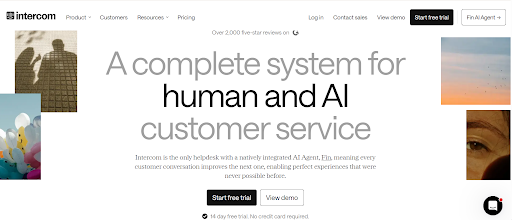
Intercom is one of the strongest options for startups that want customer support, conversational messaging, automation, and AI in one platform.
Originally known for its in-app messenger, Intercom has evolved into a broader customer service platform. Its Inbox brings customer conversations together, while its AI capabilities are designed to help agents find answers, draft responses, troubleshoot issues, and automate support workflows.
Intercom is particularly attractive to SaaS and product-led startups because support can sit directly inside the product experience.
Key features
- Shared customer inbox
- Live chat
- Email support
- AI-powered support
- AI agent capabilities
- Knowledge base
- Automation
- In-app messaging
- Customer engagement
- Reporting and analytics
- Integrations
Intercom's Inbox also supports multiple channels, including email, live chat, phone, WhatsApp, SMS, and social messaging.
Best for: SaaS, PLG, AI-first and product-led startups that want support closely connected to their product.
2. Zendesk: Best for Startups Planning to Scale

Zendesk is one of the most established names in customer service software and remains a strong option for startups expecting significant growth or selling to larger organizations. Zendesk supports ticket management, knowledge bases, automation, reporting, AI, omnichannel customer service, and a large integration ecosystem.
The platform can be more than an early-stage startup needs, but that depth becomes useful as support operations become more sophisticated.
Zendesk is also investing heavily in startup adoption. In 2026, the company announced a $100 million, two-year commitment to help startups adopt its AI-powered customer experience technology, including benefits through its Zendesk for Startups program.
Key features
- Ticket management
- AI agents
- Knowledge base
- Omnichannel support
- Automation
- Reporting
- Customer analytics
- SLA management
- Large integration marketplace
Best for: Startups with complex support requirements, enterprise customers, multiple teams, or ambitious scaling plans.
3. Freshdesk: Best Value Customer Support Software for Startups
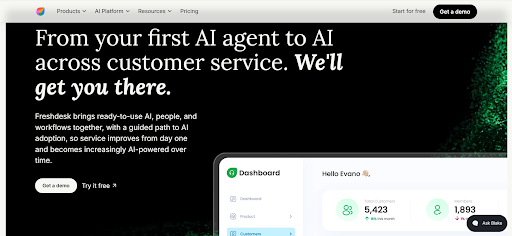
Freshdesk is a popular help desk platform for startups and small businesses that want a traditional support system without immediately moving into enterprise-level complexity.
It combines ticket management, automation, knowledge management, reporting, and AI capabilities.
One of Freshdesk's biggest advantages for startups is its combination of functionality and accessibility. Recent comparisons continue to position Freshdesk as a value-oriented alternative to larger platforms, particularly for teams looking for ticketing and automation without excessive complexity.
Key features
- Ticketing
- Shared inbox
- Knowledge base
- Workflow automation
- AI assistance
- Reporting
- Omnichannel capabilities
- Customer portals
- Integrations
Best for: Startups looking for a conventional help desk with a strong balance between features, usability, and cost.
4. Help Scout: Best Simple Customer Support Software for Small Teams
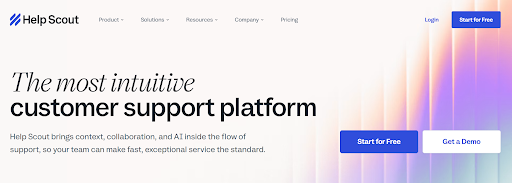
Help Scout takes a deliberately simpler approach to customer support. Instead of overwhelming a startup with enterprise-style configuration, Help Scout focuses on shared inboxes, customer conversations, knowledge bases, and a straightforward support experience.
That makes it particularly appealing to early-stage startups and small customer-facing teams that want to get organized quickly.
Help Scout is frequently positioned as a strong option for Seed and Series A teams that primarily need email support and self-service documentation.
Key features
- Shared inbox
- Email support
- Knowledge base
- Customer profiles
- Automation
- Reporting
- Help widget
- Collaboration tools
Best for: Small teams that prioritize simplicity and want an easy-to-manage customer support system.
5. Crisp: Best Lightweight Customer Support Software for Startups
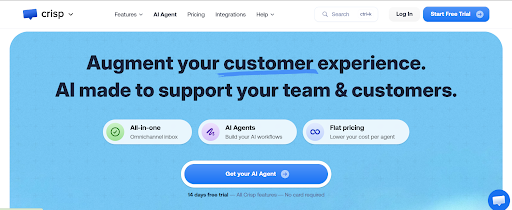
Crisp is designed around conversational customer communication and can be particularly appealing to startups that want a lightweight alternative to traditional help desk software.
The platform combines messaging, shared inbox functionality, automation, chat, and customer communication tools.
For an early-stage company, Crisp can provide a way to move beyond a basic website chat widget without immediately adopting a complex enterprise help desk.
Key features
- Shared inbox
- Live chat
- Chatbots
- Automation
- Knowledge base
- Customer profiles
- Messaging integrations
Best for: Small, chat-first startups that want a simple customer communication platform.
6. Gorgias: Best Customer Support Software for Ecommerce Startups
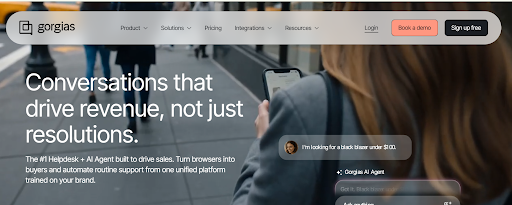
Gorgias is different from general-purpose help desks because it is heavily optimized for ecommerce customer support.
For an online store, customer service questions often involve orders, shipping, refunds, returns, product availability, and customer information. Gorgias is designed around these ecommerce workflows.
Its integrations with ecommerce platforms make it possible for support teams to access relevant customer and order information while handling conversations.
Key features
- Help desk
- Email support
- Live chat
- Social messaging
- Automation
- AI assistance
- Ecommerce integrations
- Order-related workflows
- Customer profiles
Best for: Shopify and ecommerce startups where support conversations frequently involve orders and transactions.
7. Front: Best for Collaborative Customer Support Teams
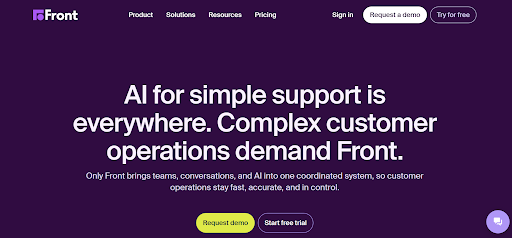
Instead of treating every customer conversation purely as a traditional ticket, Front allows teams to work together around shared communication channels.
This can be useful for startups where support overlaps with sales, customer success, operations, and account management.
Key features
- Shared inboxes
- Email management
- Collaboration
- Workflow automation
- Routing
- Customer communication
- Analytics
- Integrations
Best for: Startups where multiple departments need to collaborate around customer conversations.
8. Zoho Desk: Best Budget-Friendly Help Desk for Growing Startups
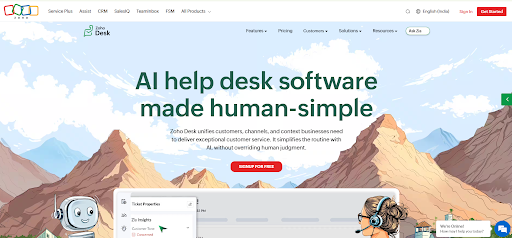
Zoho Desk is part of the broader Zoho business software ecosystem, making it particularly interesting for startups already using other Zoho products.
It provides core help desk capabilities such as ticket management, automation, knowledge management, analytics, and customer service workflows.
Key features
- Ticket management
- Automation
- Knowledge base
- AI assistance
- Reporting
- Customer portals
- Omnichannel support
- Zoho ecosystem integrations
Best for: Startups that want a broad business software ecosystem and value-oriented customer service functionality.
9. Pylon: Best for Slack-native B2B support
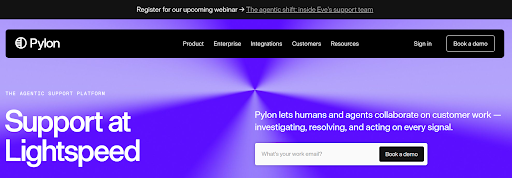
Pylon is built around the idea that B2B support increasingly happens in shared Slack channels rather than email. It centralizes conversations across Slack, email, and other channels into one workspace built for teams whose customers already expect a Slack Connect relationship.
Pylon attempts to solve this by turning support conversations, CRM information, product usage, previous interactions, and other signals into usable customer context. Its AI agents can then use that context to investigate issues before or alongside human support work.
The platform can therefore be especially useful for startups that want to scale customer support without increasing support headcount at the same rate as customer volume.
Key features
- B2B-focused ticketing and customer support
- Omnichannel support across Slack, Microsoft Teams, email, chat, SMS, WhatsApp, phone, and more
- AI-powered support agents
- Account and customer intelligence
- Product intelligence and support context
- Knowledge base and customer portal
- Workflow automation
- Customer-facing chat widget
- Integrations with CRM, analytics, issue tracking, and collaboration tools
- Reporting and analytics
- AI-powered investigation and support workflows
Best for: B2B SaaS startups, technology startups, and growing companies that support customers through Slack, Teams, email, and other conversational channels.
10. Tidio: Best for Small Startups That Need Live Chat and AI
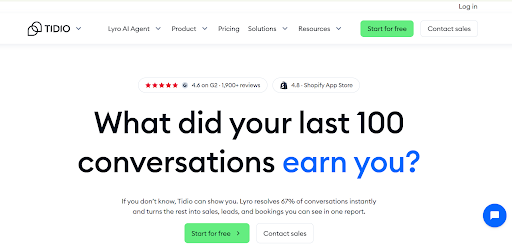
Tidio combines live chat, customer messaging, automation, and AI-powered chatbot functionality.
It can be a good starting point for startups that want to add conversational support to their website without implementing a large help desk.
Key features
- Live chat
- AI chatbot
- Automated responses
- Email support
- Customer messaging
- Help desk functionality
- Analytics
Best for: Small startups that primarily need website chat and automated answers.
Want to get your customer support or help desk software featured in our list? Reach out to hello@maarket.ai to submit your product.
Conclusion
Choosing the right customer support software can have a direct impact on how efficiently a startup grows. The goal isn't simply to find a platform with the longest feature list or the most advanced AI. It's about finding a solution that fits your current support workflow, helps your team resolve customer issues faster, and can scale as your customer base grows.
The best customer support software for startups in 2026 will ultimately be the one that reduces repetitive work without compromising the human side of customer service. A well-chosen platform should help a small team deliver faster, more consistent, and more personalized support without requiring support headcount to grow at the same pace as the customer base.
Before making a decision, evaluate your current ticket volume, support channels, team size, customer expectations, automation requirements, AI capabilities, integrations, and projected growth. Most importantly, look beyond the starting price and consider what the platform will cost and how useful it will be once your startup scales.
Discover More SaaS Tools with Maarket
Finding the right software shouldn't mean spending hours jumping between product websites, comparison pages, and reviews. Maarket helps businesses discover, evaluate, and compare SaaS products so they can make more informed software decisions.
Looking for your next SaaS solution? Explore Maarket and discover the tools built for the way your business works.
Frequently Asked Questions
What is the best customer support software for startups?
Intercom, Freshdesk, Help Scout, Crisp, and Zendesk are among the strongest options, but the right choice depends on the startup's size and support requirements. Intercom is particularly strong for AI-first and SaaS companies, while Help Scout is better suited to teams that want simple email-based support.
What is the cheapest customer support software for startups?
The cheapest option depends on the startup's number of agents, conversations, channels, and AI usage. Startups should compare the total cost of ownership rather than relying solely on advertised starting prices.
Do startups need customer support software?
Most startups benefit from dedicated customer support software once customer conversations become difficult to manage through individual email accounts or spreadsheets. A support platform can centralize conversations, automate repetitive work, and create a searchable record of customer issues.
Is AI customer support worth it for startups?
AI can be particularly valuable for startups because it can automate repetitive customer questions and help small teams handle higher support volumes. However, startups should evaluate AI based on actual resolution capabilities and usage costs rather than simply choosing a platform because it offers an AI feature.
When should a startup invest in a help desk?
There is no fixed customer count. A startup should consider adopting one when customer conversations are becoming difficult to track, response times are increasing, multiple people are handling support, or repetitive questions are consuming too much founder or employee time.
What is the difference between Intercom and Zendesk for startups?
Intercom is particularly strong for conversational, in-app, AI-powered support and product-led experiences. Zendesk offers a broader traditional customer service and ticketing platform with strong capabilities for more complex and enterprise-oriented support operations. The better option depends on the startup's support model and growth plans.
What should startups prioritize when choosing customer service software?
Start with ease of use, total cost, AI capabilities, automation, customer communication channels, knowledge base functionality, integrations, analytics, and scalability. Most importantly, choose software that matches your current support workflow without making it difficult to grow later.